Rodent calls in New Bedford follow the thermometer. Through summer, house mice and Norway rats work yards, alleys, and bin stores and bother nobody. From late September, the first cold nights send them looking for somewhere warm, and they test the buildings that make it easy.
Century-old housing makes it very easy.
5 Things an Older House Gives Them
Open mortar joints. Stone and granite foundations lose mortar steadily over a hundred years. The gaps run from soil to cellar, and unlike a crack in poured concrete, they are structural voids rather than surface damage.
Sills close to grade. Many older New Bedford homes sit with the sill 3 or 4 inches (8 to 10 cm) above soil level, putting the timber and the gap beneath it within easy reach.
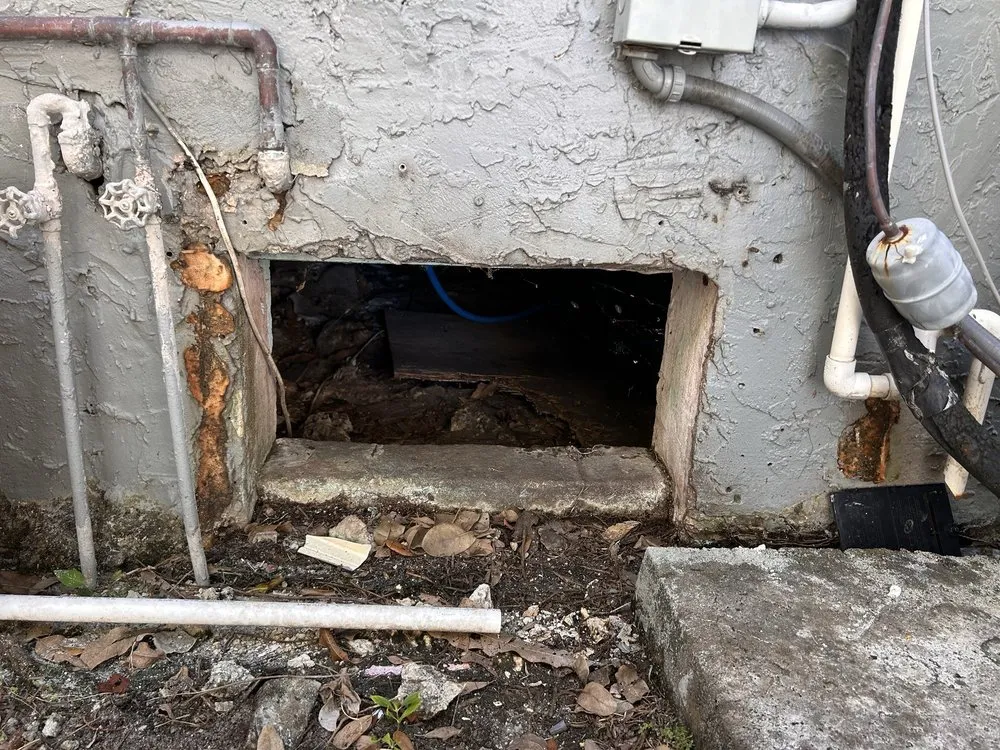
Bulkhead doors. Almost none seal at the bottom. A steel bulkhead over a stone opening leaves gaps at the corners and along the threshold that are more than adequate.
Balloon framing. Walls built without fire stops give a mouse a clear vertical run from cellar to attic. People hear scratching above a third-floor ceiling and find droppings in the cellar, and sealing 1 room achieves nothing.
Utility penetrations. A century of added water lines, gas, electric, cable, and dryer vents, each one cut through the wall and rarely sealed afterwards.
A house mouse gets through a quarter inch (6 mm), about a pencil’s width. The question stops being whether there is a hole and becomes how many.
Norway Rats Near the Harbour and Urban Core
Rats differ from mice. They do well around the working waterfront, commercial refuse, and dense older housing, where food stays steady and soft ground sits next to foundations, sheds, and bin stores. Rats are also strong enough to enlarge an existing opening, and they use a sewer connection or a cracked drain line to reach a cellar without crossing the yard.
A property near that pressure does everything right and still takes a steady supply of animals from a source it does not control. In those neighbourhoods, exclusion carries more weight than trapping alone, since trapping without sealing makes room for the next one.
The 8-Step Autumn Checklist
Work the exterior before the cold arrives:
- Walk the foundation slowly with a torch and mark every open joint, gap, and penetration. Work low, then work at eye level.
- Point the open mortar joints, and back anything too large to fill with hardware cloth or copper mesh before mortaring.
- Fit a threshold seal to the bulkhead, and repair the frame where the corners have rotted.
- Seal utility penetrations with mesh and sealant rather than expanding foam alone. Mice chew through foam.
- Fit door sweeps on cellar doors and any exterior door showing daylight at the bottom.
- Screen the vents, including dryer vents, crawlspace vents, and any old coal chute or milk door.
- Cut back vegetation touching the walls and roof, and lift stored wood and materials off the ground.
- Move the food. Birdseed, pet food, and grass seed in the cellar or garage belong in hard sealed containers rather than paper sacks.
Why Sealing First Is a Mistake
Homeowners get this wrong most often. Sealing every opening you can find as the first move traps animals inside a wall cavity, if any are already in. That gives you a smell you cannot reach for 3 weeks, and it pushes a rodent to gnaw into living space rather than back out.
The correct order is removal, verification, then sealing. Trapping and monitoring show when catches have stopped, and only then does the final opening get closed. It feels slower and it separates a job that holds from one that produces a second call in February.
Cleaning Up Afterwards
Do not sweep or vacuum droppings and nesting material dry, since that puts particles into the air. Damp them down first, wear gloves, bag the material, and ventilate the space. Ask about the cleanup step rather than improvising, if contamination covers a wide area.
For the trapping and exclusion side, see our rodent control page. Rodents carry fleas and ticks into the spaces they nest in. The PC New Bedford home page sets out the whole-property plan. Hearing movement in a wall already means it is time to book a free inspection before you seal anything.
Independent guidance: National Pesticide Information Center house mouse guide (opens in a new tab) and EPA rodenticide safety information (opens in a new tab) . These sources sit alongside the property-specific findings in your written scope.
- #house mice
- #Norway rats
- #exclusion
- #winter prevention
- #New Bedford